We often get questions from restaurant owners about the benefits of using
compostable containers in cities that do not provide commercial composting services for residents or businesses. Many people want to know what would happen if consumers put
compostable containers in the city trash bin instead of the compost bin. This means that people are beginning to realize the large amount of food packaging waste we produce and agree that we need solutions.
Our response to the first question is to ensure that everyone knows that, just like plastic containers, even compostable containers will not decompose in any reasonable time in the landfill. We need to avoid putting anything in landfills. However, if you have no choice in the community, you can still get many benefits from using compost. We call these "upstream" benefits because they occur before consumers use the product.
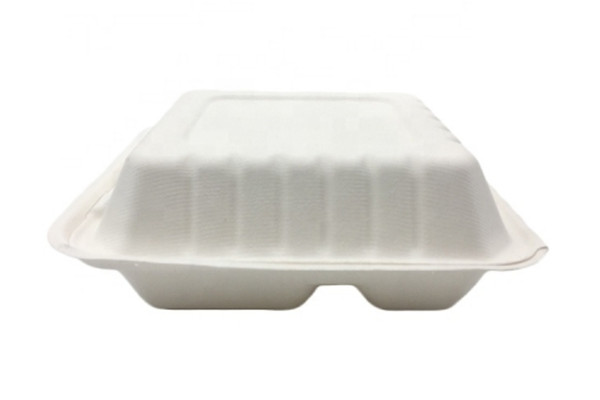 Benefits of using compostable containers
Made from renewable resources
The first upstream benefit is that
compostable food service products come from renewable resources. Whether it is corn, sugar cane or paper, everything can be remanufactured in nature, so we use resources at a more sustainable rate than petroleum-based plastics. To
Low-toxic chemicals
The second benefit is that these solutions do not contain many of the toxic chemicals used in traditional plastics. Whether it is styrene and benzene in polystyrene plastics that workers and consumers are exposed to, dioxin in the environment caused by the use of chlorine to bleach paper, or large and small oil spills in oil extraction, these are not problems with compostable products. .
Manufacturing with fewer resources
The third benefit is that many sustainable packaging solutions use less energy in production than plastic packaging. For example, compared with traditional plastics, PLA (bioplastics used in transparent containers and coffee cup linings) has reduced energy consumption by 68%.
Drive change
Another benefit that consumers get from buying compostable food service products is that it sends a strong buying signal to the market. This signal indicates that manufacturers will reap the rewards for continuing to innovate and reduce the cost of plastic-free packaging. It also sent a signal to municipalities that they should create more permits for commercial composting facilities to process these products into usable compost instead of filling up landfills.
How about using recyclable plastic?
If you are wondering, using recyclable plastic is not a long-term sustainable answer either. This is because 93% of all the plastic we throw away every year (31 million tons in total, a staggering 28 million tons) never reaches the recycling facility, but it ends up in landfill. Of the small amount that does enter the "recycling" stream, in fact, very few are returned in original forms such as plastic water bottles. ...
You can safely assume that most of the plastic you put in the recycling bin will eventually be landfilled, because some plastics do not have enough profitable markets to actually recycle them. If purchased by a recycling facility, it usually ends up being transported to a container ship destined for China, where it is incinerated for energy, rather than turning into another plastic bottle as many people imagine.
In addition, food waste makes paper and plastic unrecyclable due to contamination. Even if there is no commercial compost in your area, there are many reasons to switch. It conveys the message you care about to your community, government, and consumers, and you are willing to promote the changes you want to see.
Hyde always takes a step forward. We will continue to stock as many
compostable containers and
sustainable products as possible while maintaining a high level of service. We will also let you, our valued customer, understand the market situation so that you can continue to use the best products that are responsible for the environment to serve your customers.
Jeff Manion
Product tester
In-depth market research of dialysis paper products, only to get your approval
Click to contact me

 Paper Package
 Paper Package
 Biodegradable Tableware


 5012
5012 22
22





 (Saudi Arabia) Submit Demand 45 Minutes Ago
 (Australia) Submit Demand 25 Minutes Ago
 (United Kingdom) Submit Demand 36 Minutes Ago
 (Sweden) Submit Demand 15 Minutes Ago